Top LambdaTest Alternatives for 2026
Written byDominik SzahidewiczReviewed byMariusz Wójcik


Updated: September 28, 2026View as Markdown
🤖 Summarize this article with AI:
💬 ChatGPT 🔍 Perplexity 💥 Claude 🐦 Grok 🔮 Google AI Mode
BugBug – Web-only teams that need to create and run automated tests without writing code or managing cloud infrastructure.
BrowserStack – Teams with existing test scripts needing the broadest real device and cross-browser execution coverage.
Sauce Labs – Teams needing deep CI/CD pipeline integration, test analytics, and visual testing alongside cross-browser execution.
TestGrid – Teams wanting AI-driven scriptless automation across web, mobile, API, and load testing in one platform.
TestSigma – Non-technical teams needing codeless multi-platform testing with AI-powered test maintenance.
Cypress / Playwright – Developer-led teams wanting full open-source framework control with their own execution infrastructure.
Check also:
LambdaTest (now TestMu AI) is a cloud platform for running tests across 2,000+ browser and OS combinations. It’s built for teams that already have test scripts and need massive execution coverage across environments. High-cost enterprise solutions like Kane AI offer similar capabilities, but open-source alternatives can replicate many of their benefits while keeping costs predictable and under control.
That last part is worth pausing on: LambdaTest runs your tests. It doesn’t help you create them.
Teams searching for LambdaTest alternatives tend to split into three distinct groups — and the right alternative depends entirely on which one you’re in:
After considering pricing and resource overhead, it's clear that affordable browser testing is a priority for many teams.
Open-source alternatives can offer significant annual savings and potential savings compared to enterprise tools like Kane AI.
Startups and small teams can achieve substantial annual savings by choosing affordable browser testing solutions and open-source tools. While most costs arise from developer time and infrastructure, the potential savings over enterprise pricing remain significant.
If you’re in the first group, most LambdaTest alternatives articles won’t help you — they’ll recommend other execution platforms that have the same gap. The shortlist below covers both cases honestly.
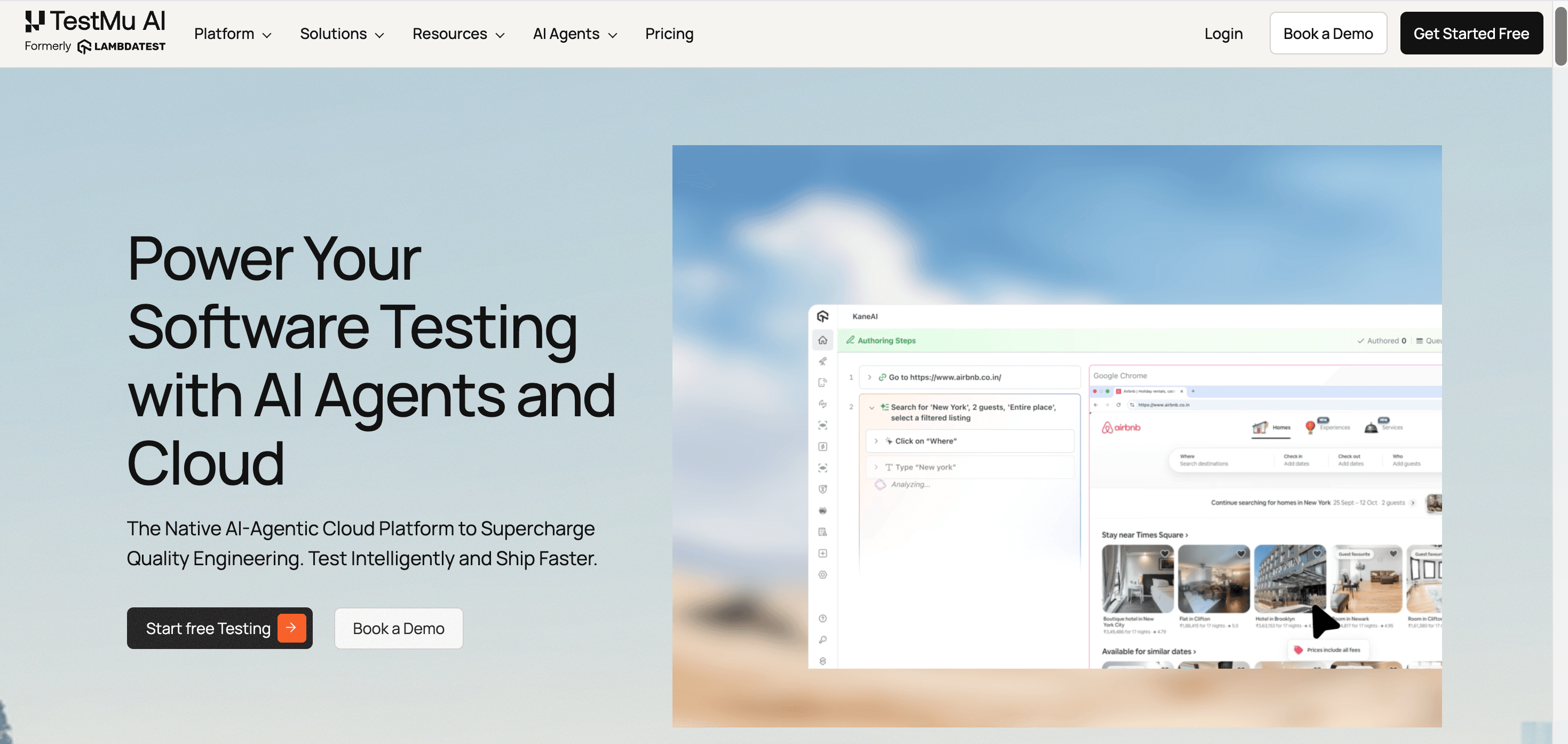
LambdaTest (now TestMu AI) is a cloud-based execution platform providing access to 2,000+ browser and OS combinations for cross-browser testing, real device mobile testing, and parallel execution. It works as an execution layer on top of existing test suites — integrating with Selenium, Playwright, Cypress, and Puppeteer to run scripts at scale across environments your team doesn't have to maintain.
LambdaTest includes visual regression testing through screenshot comparison, though its primary focus is UI rendering and DOM-level validation rather than full flow testing. Parallel testing is supported, but additional parallel sessions carry extra cost. The platform also supports headless Chrome testing and open-source mobile frameworks including Appium, Espresso, and Flutter.
A few things worth noting before you evaluate: LambdaTest offers a free plan with limited features. The platform is rebranding to TestMu AI in early 2026, with Kane AI as its enterprise-tier AI-powered testing offering — a direction that positions it further toward the enterprise end of the market and away from budget-conscious teams.
The core trade-off remains the same regardless of branding: LambdaTest runs your tests. It doesn't help you create them.
Best for:
Teams typically look for alternatives when:
For teams that need to create tests, not just run them
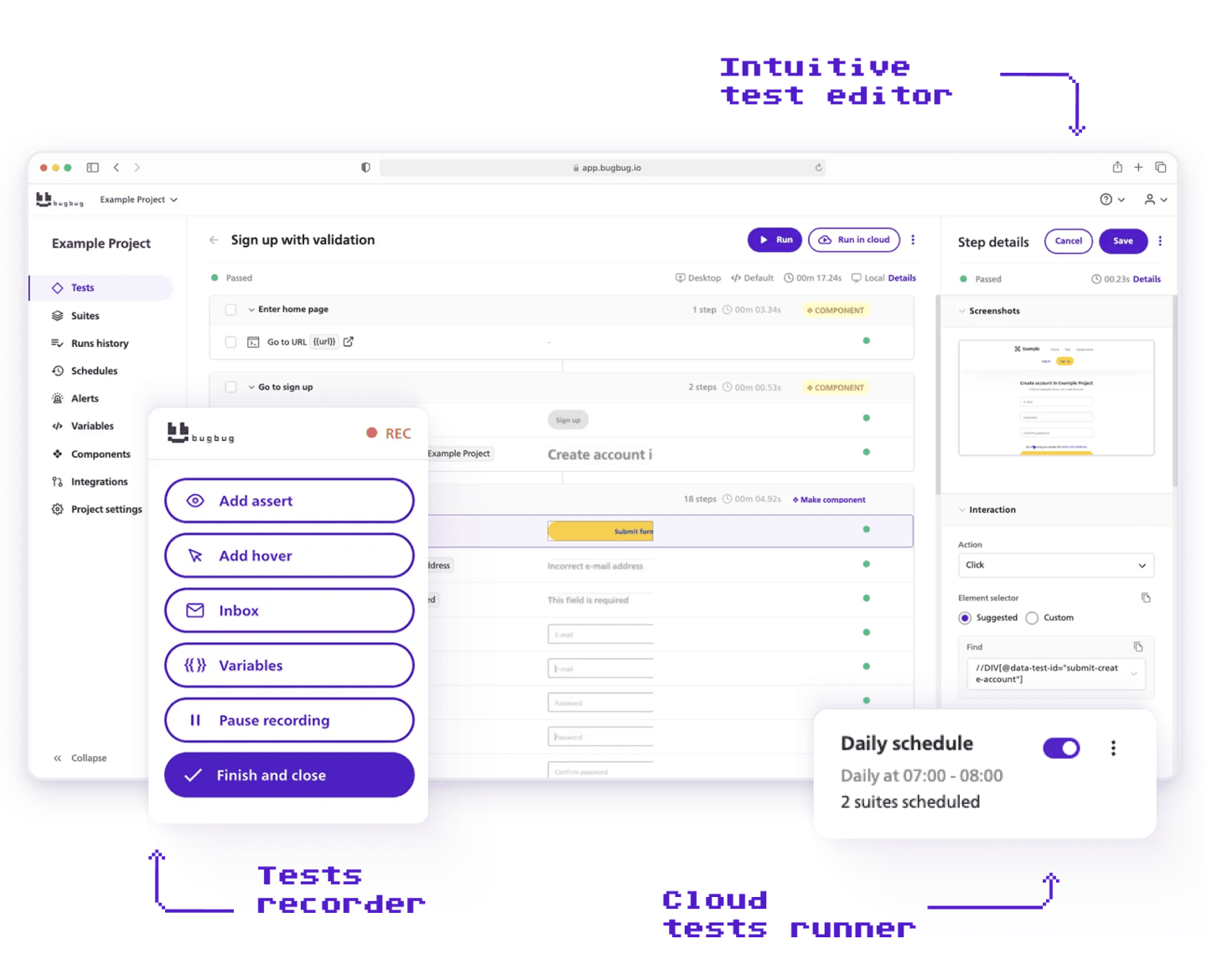
Best for: B2B SaaS teams, Small QA teams, Cross-functional teams, Devs without QA that need to build and run end-to-end web tests — without writing code, without managing cloud infrastructure, and without a separate test-authoring tool.
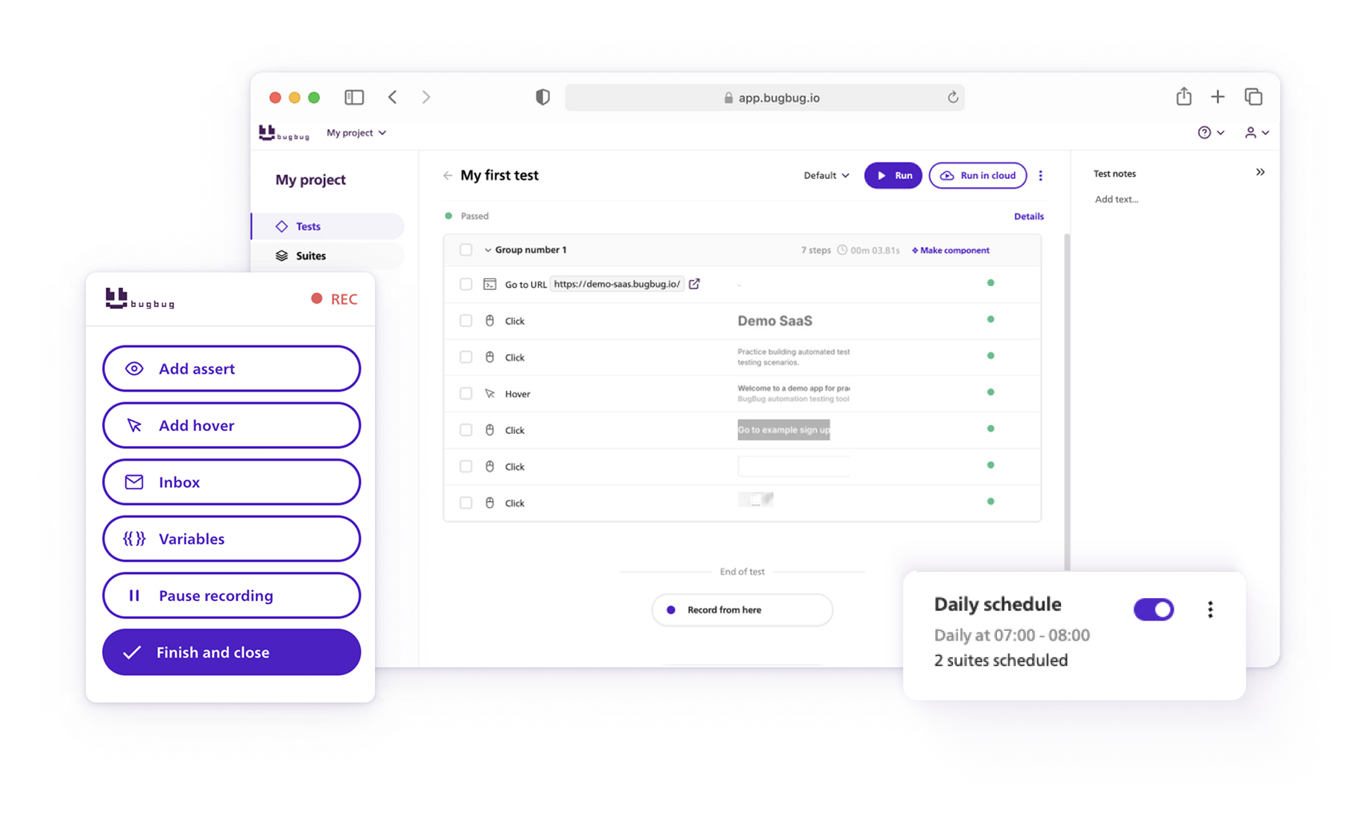
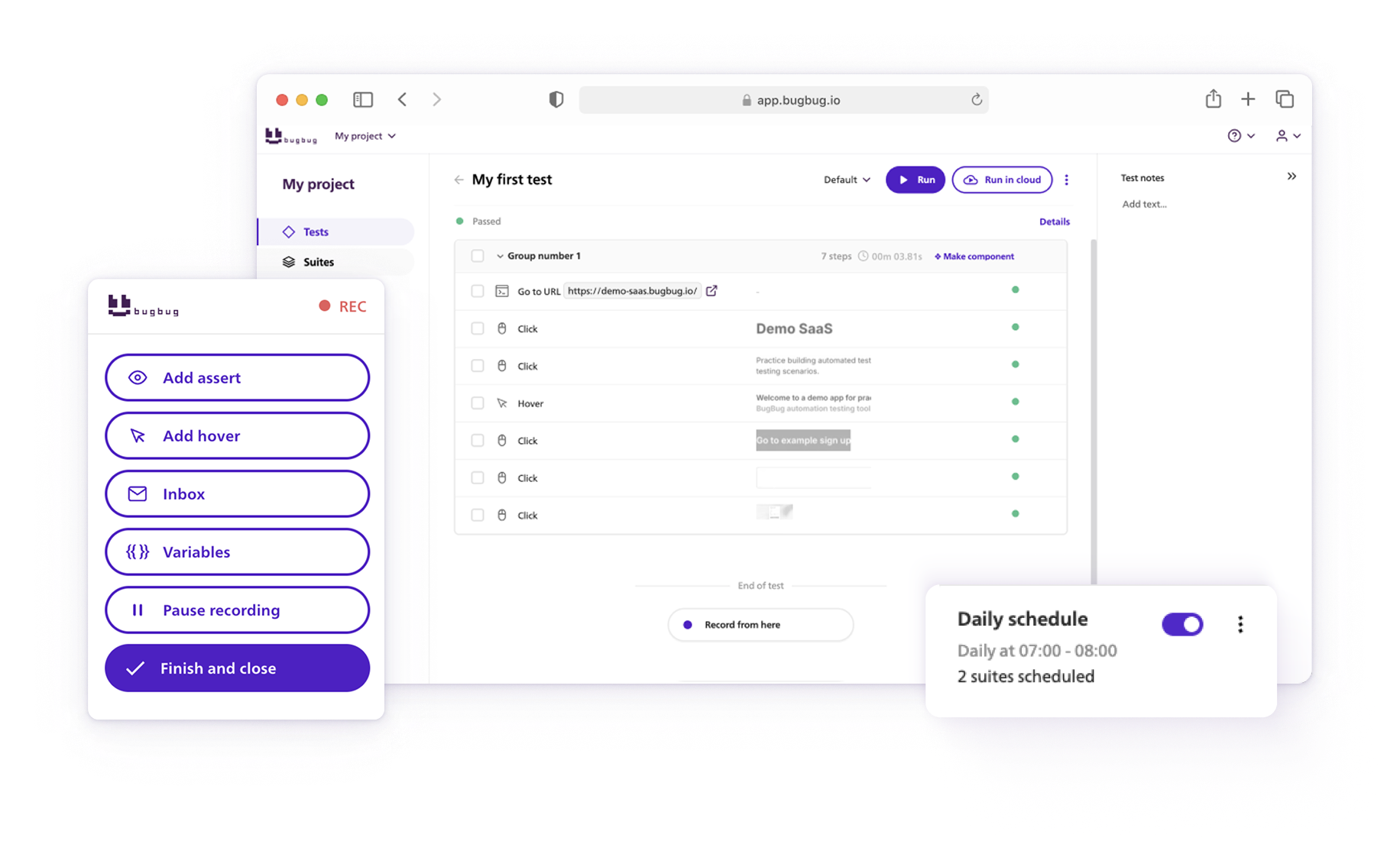
BugBug sits in a different category than LambdaTest. LambdaTest gives you a cloud to run tests on. BugBug gives you the recorder to create your tests and the infrastructure to run them, no separate authoring tool required. For teams without existing scripts, that’s the complete solution in one tool.
Using a Chrome extension-based recorder, teams can interact with their app to create automated tests in minutes and run them locally or in the cloud on a schedule.
Strengths:
Limitations:
LambdaTest answers: I have test scripts — run them across 2,000 browser configurations in parallel. BugBug answers: I need to create tests and run them — without writing code or managing infrastructure.
These are different problems. If you have existing scripts and need broad browser coverage, LambdaTest is the right tool for you. If you need to build your test suite from scratch — especially without a developer — LambdaTest isn’t the answer, regardless of which alternative you compare it to.
BugBug offers flat, separate pricing for unlimited users, while LambdaTest's pricing scales with usage and parallel sessions. BugBug includes built-in test management features, whereas LambdaTest requires external tools for test management.
| Feature | BugBug | LambdaTest |
|---|---|---|
| Test creation | Built-in visual recorder | Not included — bring your own scripts |
| Coding required | No — record by clicking | Yes — must write test scripts |
| Local execution | Yes — free on all plans | No — cloud-only |
| Browser coverage | Chromium-based | 2,000+ browser/OS combinations |
| Mobile testing | Not supported | Supported (real devices) |
| Pricing model | Free plan + flat $189/month (separate pricing for unlimited users) | Session-based — scales with usage and parallel sessions |
| Free plan | Yes — unlimited tests | Limited free tier |
| Team pricing | Flat — unlimited users | Usage and session-based |
| Test management | Built-in | Requires external tools |
| Infrastructure | None — fully managed | Cloud VMs — performance can vary |
| Best for | Web-only, non-dev teams building tests | Teams with existing scripts needing broad execution coverage |
Choose LambdaTest if you need a platform that focuses on robust testing infrastructure and comprehensive testing capabilities for cross-browser and mobile environments:
💡 If you’re starting from scratch and need to build your test suite:
BugBug’s free plan gets you from zero to first passing test in under 10 minutes — no credit card, no scripts required.
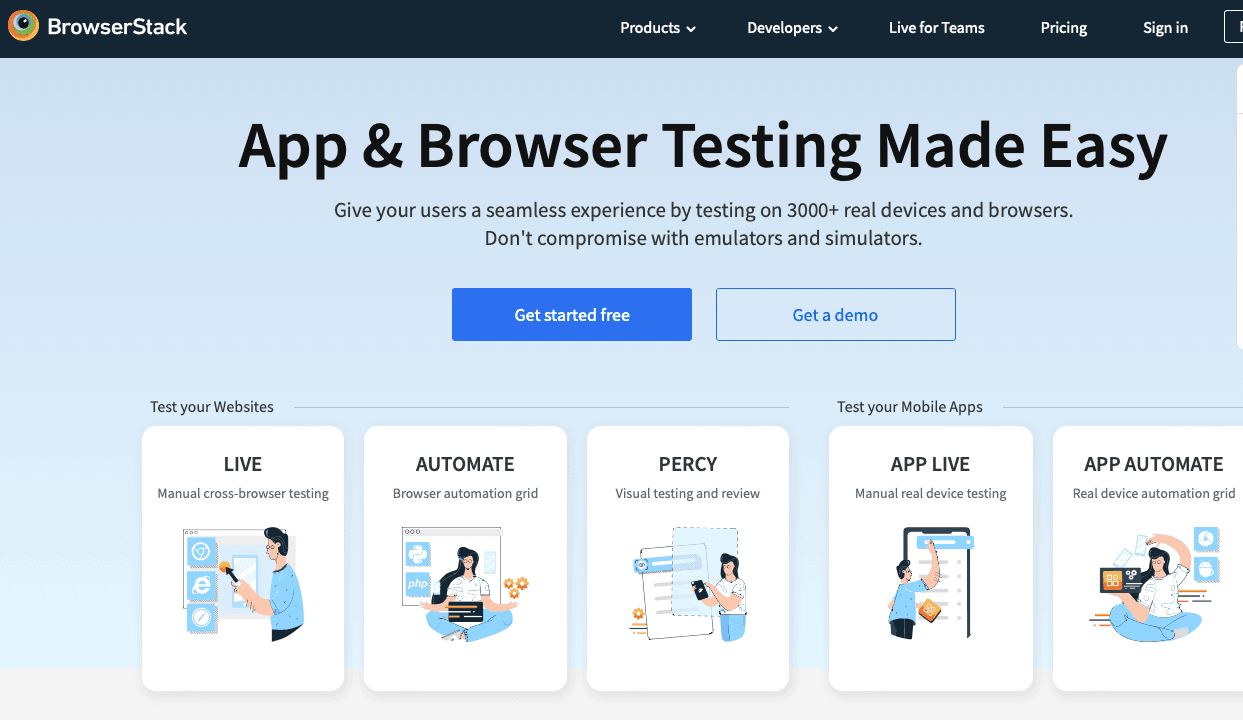
Best for: Teams with existing test scripts needing the broadest real device and cross-browser cloud execution coverage available.
BrowserStack is the most widely used real device cloud for cross-browser and mobile testing. It provides live interactive testing alongside automated execution, with access to thousands of real devices and browser combinations. BrowserStack provides extensive device coverage, giving software teams access to over 30,000 real devices and 3,500+ browser/OS combinations. Enterprise teams with large, mature test suites typically evaluate BrowserStack alongside LambdaTest as the primary comparison. BrowserStack is a main competitor to LambdaTest, especially for teams committed to using open-source automation frameworks.
Strengths:
Limitations:

Best for: Teams needing deep CI/CD pipeline integration, test analytics, and visual testing alongside broad cross-browser execution.
Sauce Labs is an enterprise-grade cloud testing platform with a particular strength in test reporting, analytics, and pipeline integration. Where LambdaTest and BrowserStack focus primarily on execution coverage, Sauce Labs adds a layer of insights on top — helping teams understand test health and failure patterns across runs.
Sauce Labs includes advanced test management and test recording features, making it easier to organize, track, and troubleshoot automated tests. Sauce Labs, now part of Tricentis, offers strong security certifications including SOC 2 and ISO 27001, making it the preferred choice for enterprise-grade security. Sauce Labs is a direct competitor to LambdaTest and BrowserStack for teams committed to using open-source frameworks.
Strengths:
Limitations:

Best for: Teams wanting AI-driven scriptless automation across web, mobile, API, and load testing without building separate tooling for each.
TestGrid is a cloud-based testing platform that combines scriptless automation with real device coverage. Where LambdaTest is purely an execution platform for existing scripts, TestGrid includes test creation capabilities — making it a closer all-in-one alternative for teams starting from scratch.
TestGrid supports automated testing for both web applications and mobile apps, providing comprehensive testing capabilities to meet diverse testing needs.
Strengths:
Limitations:
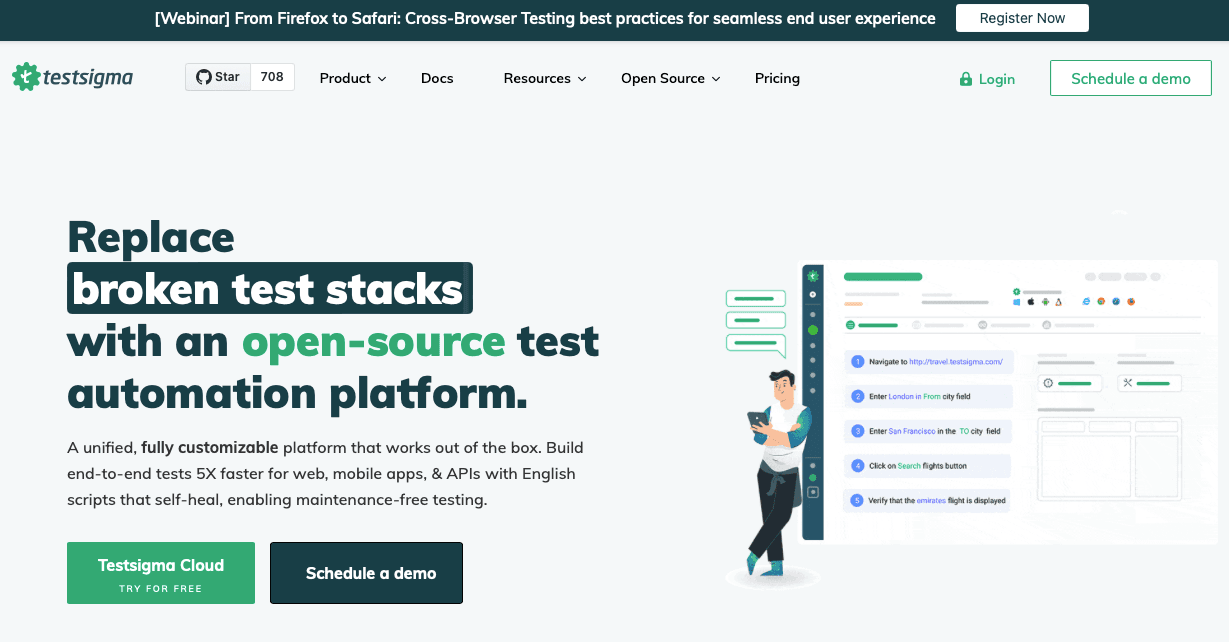
Best for: Non-technical teams needing AI-powered codeless testing across web, mobile, and API — with natural language test authoring and built-in execution.
TestSigma is a cloud-based test automation platform that lets teams create tests in plain English using natural language processing. Unlike LambdaTest, it includes test authoring capabilities — making it viable for teams that can’t write code and need both creation and execution from one platform.
Strengths:
Limitations:
If your team has JavaScript engineers and wants full ownership over both test creation and execution — no SaaS pricing, no vendor dependency — open-source frameworks paired with your own CI infrastructure give you maximum control. Open-source tools eliminate recurring subscription fees, offering flexibility and potential annual savings.
The setup effort for open-source testing tools can range from a few hundred to nearly a thousand engineering hours, depending on the tool, so plan for significant man hours during initial deployment and ongoing maintenance. Most tools can run locally, but for mid-sized teams, expect $500–$5,000/year in servers, monitoring, and LLM/API usage.
Open-source frameworks eliminate SaaS execution costs entirely — but require full ownership. Your team writes every test in code, manages runners, and maintains the infrastructure as browsers evolve. For teams with the engineering resources available, this is often the most cost-effective long-term path at scale.
Need automation without the infrastructure ownership?
Test easier than ever with BugBug test recorder. Faster than coding. Free forever.
Get started
LambdaTest is excellent at what it’s designed for: giving teams with existing test scripts access to a massive range of browsers and devices without maintaining their own execution infrastructure. If that’s your problem, LambdaTest deserves to be on your shortlist alongside BrowserStack and Sauce Labs.
But it’s the wrong starting point for teams that are still building their test suite. If you don’t have scripts, LambdaTest doesn’t give you a way to create them — and recommending it to a team without existing automation is setting that team up for a frustrating evaluation. If you’re still choosing where to start, compare the top web application testing tools.
The right alternative depends on where your team actually is:
The best alternative for your team depends on your specific testing needs, potential savings, and annual savings compared to enterprise solutions. Consider these factors to maximize cost efficiency and choose the platform that delivers the most value for your organization.
1. Establish whether you need test creation or test execution — or both:
Assess your team's specific testing needs and required testing capabilities before selecting a tool. Consider what features are necessary to support your automation goals, such as support for web, mobile, or API testing, and whether you need AI-powered or codeless workflows.
2. Audit your actual browser coverage requirements:
3. Assess who will write and maintain the tests:
4. Model pricing at your realistic parallel execution needs:
Consider the setup effort involved in implementing and maintaining each alternative, especially for open-source solutions. Estimate the engineering time required for initial setup, integration, and ongoing optimization.
5. Validate the full pipeline before committing:
Your next release. Properly tested.
Join 1,200+ QA teams that automated their regression coverage with BugBug.

Dominik Szahidewicz is a Software Quality Evangelist specialising in quality assurance, test automation, and modern software testing practices. He creates practical, research-driven content that helps QA professionals, developers, and product teams improve test coverage, automate repetitive testing, and release more reliable web applications.
Drawing on his experience in technical writing, data analysis, and application consulting, Dominik translates complex testing concepts into clear, actionable guidance. His areas of interest include end-to-end testing, no-code test automation, regression testing, and the use of AI in software quality assurance.

Senior software engineer at BugBug, where he's spent 6 years helping shape the product. He's a T-shaped developer skilled in frontend with React and TypeScript, browser extensions, backend work, and building AI agents and tooling. His strengths also include UX instincts, a product-minded approach, and process automation.
Join thousands of QA experts. Subscribe to our newsletter.
Get more testing tips and product related content. Zero spam.
Check out our curated list of the best Rainforest QA Alternatives available on the market based on features and market fit.
Compare the top Selenium alternatives for 2026 — from Playwright and Cypress to BugBug. See features, pricing, and which fits your team.
Looking for the best Cypress alternatives in 2026? Explore leading competitors, features, and tools redefining automated software testing.
Compare BrowserStack alternatives including Sauce Labs, TestMu AI, TestingBot, Perfecto, Kobiton and open-source options, with pricing and best-fit guidance.
Discover the best Puppeteer alternatives in 2026! From Playwright to advanced web scraping tools, find the perfect solution for your automation needs.
Discover the top TestSigma alternatives and competitors, and learn how each tool differs.
Explore the best Autify alternatives for software testing in 2026, including BugBug, Testim, TestRail, Testsigma, and more top tools.
Let's explore the best Playwright alternatives in 2026: Cypress, Puppeteer, Selenium, and more test automation tools and frameworks for developers.
Discover the best Mabl alternatives for automated and visual testing. Compare top tools to find the right solution for your QA needs.