Best Selenium Practice Websites in 2026
Written byDominik SzahidewiczReviewed byBartek Krzyzanowski


Updated: September 12, 2026View as Markdown
🤖 Summarize this article with AI:
💬 ChatGPT 🔍 Perplexity 💥 Claude 🐦 Grok 🔮 Google AI Mode
Whether you’re prepping for a QA job interview, learning Selenium from scratch, or validating your test scripts, the best way to sharpen your skills is by using practice websites. Selenium’s ability to automate web browsers makes it a cornerstone of automation testing, enabling testers to streamline processes and improve efficiency.
| Website | Skill Level | Why It’s Crucial | Core Skill You Build |
|---|---|---|---|
| The Internet (Heroku App) | Beginner → Intermediate | Best all-around foundation site | Locators, alerts, iframes, authentication |
| Dynamic Loading (Heroku) | Intermediate | Teaches proper synchronization | Explicit waits, handling AJAX |
| Swag Labs (SauceDemo) | Intermediate | Real end-to-end user flows | Checkout automation, state validation |
| Parabank | Intermediate → Advanced | Business logic simulation | Multi-step workflows, transaction validation |
| UI Test Automation Playground | Advanced | Interview-level difficulty | Dynamic IDs, flaky elements, advanced interactions |
Why These Five?
Because together they train:
Master these, and you’re operating at a professional Selenium level.
| Website | Skill Level | Type | Registration required | Practice Use Case | Real-World Simulation |
|---|---|---|---|---|---|
| The Internet Heroku App | Beginner → Intermediate | Basic Element Interaction | No | Practice test cases for web applications: clicks, alerts, checkboxes, authentication | Admin panels, login systems |
| ToolsQA Automation Practice Form | Beginner | Form Handling | No | Practice test cases for web applications: text fields, radio buttons, dropdowns, validation | HR portals, signup forms |
| CandyMapper | Intermediate | UI Testing | No | Practice test cases for web applications: layout bugs, hidden elements, unstable UI behavior | UI reviews, accessibility checks |
| Dynamic Loading (Heroku) | Intermediate | Dynamic Content | No | Practice test cases for web applications: element delays, explicit wait strategies | AJAX-heavy dashboards |
| Swag Labs (SauceDemo) | Intermediate | E-commerce Simulation | No — demo credentials are provided | Practice test cases for web applications: shopping cart, checkout, sorting, user flows | Retail and e-commerce platforms |
| Demoblaze | Beginner → Intermediate | E-commerce Simulation | Optional — required for account-specific flows | Practice test cases for web applications: add to cart, product details, purchase flows | Online stores, UI state validation |
| The Internet Heroku App – File Upload | Intermediate | Advanced Element Interaction | No | Practice test cases for web applications: file uploads, input validation | Resume uploads, image management systems |
| Formy | Beginner → Intermediate | Form Handling & UI Design | No | Practice test cases for web applications: modal handling, autocomplete, form validation | Signup/login UI automation |
| The Internet Heroku App – Floating Menu | Intermediate | Scrolling & UI Interaction | No | Practice test cases for web applications: scroll events, floating navigation | Sticky menus in long content pages |
| Parabank | Intermediate → Advanced | Banking App Simulation | Yes — for customer account flows | Practice test cases for web applications: login, fund transfers, transaction validation | Fintech and banking workflows |
| UI Test Automation Playground | Advanced | Advanced UI Component Practice | No | Practice test cases for web applications: hover actions, dynamic IDs, delayed buttons | Component library testing, flaky UI debugging |
| Techlistic Selenium Challenges | Beginner → Advanced | Structured Challenge-Based Practice | No | Web tables, form validation, end-to-end scenarios with difficulty levels | Interview-style exercises, progressive automation training |
| OWASP Juice Shop | Advanced | Security-Focused Web Application | Optional — some account-based challenges require it | Complex DOM handling, advanced locators, edge-case automation | Enterprise apps with security layers, unstable UI, real-world complexity |
Each website name above is a direct link to the respective practice site, allowing you to quickly access and use these resources for Selenium test cases on web applications.
Check also:
Selenium WebDriver is a browser automation framework widely used for automation testing, allowing you to simulate real user interactions and verify application behavior.
You can:
Developers use Selenium WebDriver to create automated scripts for testing web applications.
It supports Java, Python, JavaScript, and C#, making it flexible for different tech stacks.
But knowing commands isn’t enough. The real skill comes from applying them in unpredictable, real DOM structures.
For advanced Selenium practices, consider building Data-Driven, Page Object Model (POM), and Keyword-Driven frameworks using tools like TestNG or Pytest.
That’s exactly what the practice websites below will help you do.
Selenium demo sites come in various types, each catering to specific testing needs and scenarios. These websites are valuable resources to learn and practice test automation using different tools. They provide a sandbox environment for testers to apply their Selenium skills, experiment with different automation techniques, and gain practical experience.
Once your setup is ready, websites with bugs for testing provide a safe environment for practicing realistic defect detection.
Some common types of Selenium demo websites include:
1. Basic Element Interaction: These websites focus on teaching the fundamentals of Selenium, including locating web elements, working with selectors, performing actions like clicks and inputs, and understanding the Document Object Model (DOM) structure. Mastering actions like drag-and-drop, right-click, hover, and keyboard shortcuts is crucial in Selenium testing. The features and interactive elements on these sites help users automate a variety of web UI scenarios.
2. Form Handling: Websites under this category provide a range of forms with different input fields, dropdowns, radio buttons, and checkboxes. Testers can train automating form submissions and validations, exploring the features that simulate real-world form interactions.
3. Dynamic Content: Dynamic websites have elements that change based on user interactions or time. Some sites allow you to practice handling API-driven content and dynamic selectors, helping testers understand how to manage dynamic content using waits and dynamic element locators. UI Test Automation Playground is excellent for practicing with dynamic elements, AJAX, and non-blocking interactions, making it a great resource for tackling front end automation challenges.
4. E-commerce Simulations: E-commerce Simulations mimic online shopping platforms and offer scenarios like adding products to the cart, applying discounts, and checking out for testers to practice end-to-end user flows and validations. These demo sites often include features such as product filtering, cart management, and order confirmation to enhance the testing experience.
5. Multi-browser and Cross-platform Testing: Some websites allow testers to switch between different browsers and platforms, providing a realistic testing environment for cross-browser compatibility.
Many of these demo websites, such as CandyMapper, are designed specifically for web UI testing, allowing users to interact with various features and practice bug detection without requiring code implementation. These resources are ideal for anyone looking to learn, practice test automation, and evaluate different tools in real-world scenarios, especially when dealing with complex front end frameworks and web UI components.
Let’s see what are the best websites for practicing Selenium—excellent resources to learn and practice Selenium automation using various tools and selectors. These sites allow users to practice Selenium through hands-on test cases, helping to build real-world automation skills. They stand out due to their interactive features, such as customizable test cases, demo environments, and a variety of web elements to automate, making them ideal for mastering Selenium and evaluating different testing strategies.
Best for: Beginners → Intermediate
Difficulty: ⭐⭐☆☆☆
Focus: Locators, basic interactions, isolated automation challenges
The Internet (Herokuapp) is a gold standard for beginners, offering a wide range of features and interactive elements such as checkboxes, dropdowns, broken images, and hover-over effects. Its variety of scenarios allows users to automate interactions and verify compatibility across different web elements. The Internet Heroku App is a widely recognized practice website for Selenium automation.
You can practice:
Why it’s powerful:
Each feature is isolated, so you can concentrate on improving a single automation skill without distraction.
If you’re new to Selenium, start here.
Visit this practice website: https://the-internet.herokuapp.com/
Best for: Intermediate learners
Difficulty: ⭐⭐⭐☆☆
Focus: Explicit waits, synchronization, dynamic elements
Dynamic Loading is one of the most valuable sections within The Internet site because it trains the skill responsible for most flaky automation tests: timing. The features of this section include elements that appear only after a delay or user interaction, making it ideal for practicing synchronization and explicit waits.
You can practice:
Why this matters:
Modern web apps rely heavily on dynamic loading. Mastering synchronization dramatically improves test stability.
Visit this practice website: https://the-internet.herokuapp.com/dynamic_loading
Best for: Form automation beginners
Difficulty: ⭐⭐☆☆☆
Focus: Form validation, input handling, dropdowns
ToolsQA provides a structured automation practice form featuring a wide range of interactive elements and functionalities. These features include common UI components designed for testing form automation.
You can automate:
Why this matters:
Reliable form automation and assertion writing — essential in real-world projects.
Visit this practice website: https://toolsqa.com/
Best for: UI bug detection & unstable behavior
Difficulty: ⭐⭐⭐☆☆
Focus: Handling imperfect UI and edge cases
CandyMapper is a demo website specifically designed for practicing and testing web UI functionality. It provides an interactive environment where you can practice Selenium and focus on bug detection without needing to write code. This makes it ideal for web UI testing and hands-on practice.
You can practice:
This is especially useful for interview preparation where edge cases matter.
Visit this practice website: https://candymapper.com/
Best for: End-to-end automation
Difficulty: ⭐⭐⭐☆☆
Focus: Full user journeys, validation, state management
Swag Labs mimics an e-commerce portal and provides a variety of features for automation practice, such as interactive product selection, shopping cart management, and a multi-step checkout process. These features allow you to automate realistic user scenarios and verify compatibility across different flows.
You can automate:
Real-world value:
Simulates a complete e-commerce business flow — ideal for portfolio projects.
Visit this practice website: https://www.saucedemo.com/
Best for: Lightweight e-commerce site testing
Difficulty: ⭐⭐☆☆☆
Focus: Cart flows, modal handling, purchase validation
Demoblaze is a simpler online store simulation with features such as product listings, shopping cart functionality, and modal dialogs. These features allow you to practice automating interactive elements and common e-commerce scenarios.
You can practice:
A good stepping stone before moving to more complex business flows. When you’re ready to apply these skills to your own application, try BugBug free and record a real browser flow.
Visit this practice website: https://www.demoblaze.com/
Best for: Business logic automation
Difficulty: ⭐⭐⭐⭐☆
Focus: Stateful flows, secure transactions
Parabank simulates an online banking portal, offering a range of features such as interactive account management, secure login, and multi-step transaction scenarios. These features make it valuable for practicing automation of business logic, including fund transfers and validating login behavior for banking applications.
You can automate:
Why this matters:
Banking-style workflows require validation across multiple steps — excellent practice for enterprise-level systems.
Visit this practice website: https://parabank.parasoft.com/parabank/index.htm
Best for: Advanced automation engineers
Difficulty: ⭐⭐⭐⭐⭐
Focus: Dynamic IDs, flaky UI, advanced interactions
This site is intentionally tricky and built to challenge automation engineers with a wide range of features, including dynamic elements and advanced interactive scenarios.
You’ll face:
UI Test Automation Playground is excellent for practicing with dynamic elements, AJAX, and non-blocking interactions.
Why this matters:
Perfect for preparing for advanced Selenium technical interviews.
Best for: Structured learning
Difficulty: ⭐⭐☆☆☆ → ⭐⭐⭐⭐☆
Focus: Guided automation exercises
Techlistic provides a variety of test cases for practice, offering structured Selenium challenges with difficulty ratings.
Exercises include:
Techlistic Challenges offers structured exercises like 'Automating Web Tables' or 'E-commerce End-to-End Scenarios' with difficulty ratings from beginner to advanced.
Because tasks are structured and progressive, it’s ideal for systematic skill development.
Visit this practice website: https://www.techlistic.com/2023/05/best-selenium-practice-exercises.html
Best for: Advanced testers & security-aware automation
Difficulty: ⭐⭐⭐⭐⭐
Focus: Complex DOM, unstable elements, edge cases
OWASP Juice Shop is primarily a security training application but also serves as a high-difficulty automation playground. Its features include a wide range of interactive elements and complex scenarios, making it valuable for advanced testers looking to automate challenging user flows and verify compatibility in demanding environments. OWASP Juice Shop provides a high-difficulty environment for automation practice while primarily focusing on security testing.
You can practice:
Not beginner-friendly — but extremely valuable for advanced automation engineers.
Visit this practice website: https://owasp.org/www-project-juice-shop/
To get the most value:
If you can automate stable, maintainable tests and effectively practice selenium by executing a variety of test cases across these environments, you’re operating at a professional Selenium level.
Practice sites are useful for learning selectors. They are not useful for learning what a regression suite feels like, because nothing about them changes between runs.
Once you can write a selector, point a recorder at an app that actually ships: record a login, a search and a checkout, then run the suite again after the next deploy and see what breaks.
BugBug's test recorder is free for local runs with no test limit, which makes it a reasonable place to do this.
Ready to apply your Selenium practice to a real web app?
Choose one critical user flow, record it in BugBug, and turn it into a repeatable automated browser test in minutes.
Start testing for free
Selenium remains a cornerstone of automated testing, and practice websites offer an excellent platform for testers to refine their skills and experiment with various testing scenarios. The software testing community continually shares new resources and feedback, helping others learn and practice test automation more effectively.
Whether you’re a novice beginning your journey in test automation or a seasoned professional seeking to enhance your skills, engaging with the community, sharing your comments, and lending your voice can help improve and expand these resources for everyone. Professionals and beginners alike benefit from this collaborative environment, gaining new insights and learning opportunities. Don’t forget to explore tutorials and walkthroughs on YouTube to supplement your practice and deepen your understanding.
Selenium’s Documentation is the most reliable source for learning core concepts, setup, and best practices.
Across QA forums, Reddit threads, Slack groups, and automation communities, both testers and developers frequently talk about:
The community often shares new ways to practice Selenium, including curated lists of demo sites and hands-on environments for bug finding and web UI testing. When practicing on real-world sites like YouTube or Amazon, it's important to use caution to avoid overloading their services.
Users often ask:
When evaluating the best websites for Selenium practice in 2026, community feedback helps identify which platforms are truly useful versus those that only cover basic click scenarios.
Community members regularly share:
Automation is evolving, and new practice environments appear frequently. When recommending a new selenium practice website, including a direct link is essential so others can quickly try it out. Staying active in the community ensures you don’t miss valuable resources.
One widely respected community resource is Elemental Selenium — a free, weekly newsletter that delivers concise, expert-level tips focused on solving real Selenium challenges.
It covers:
Subscribing to resources like this keeps you updated without overwhelming you.
Community members often seek recommendations for effective Selenium practice websites.
If you want to grow faster:
The Selenium ecosystem thrives because both testers and developers openly share knowledge and collaborate on automation solutions.
Remember to determine your specific learning goals. Consider your skill level. If you’re a beginner, start with a simple website that focuses on basic interactions. As you gain confidence and expertise, you can move on to more complex sites that offer advanced challenges.
Happy (automated) testing!
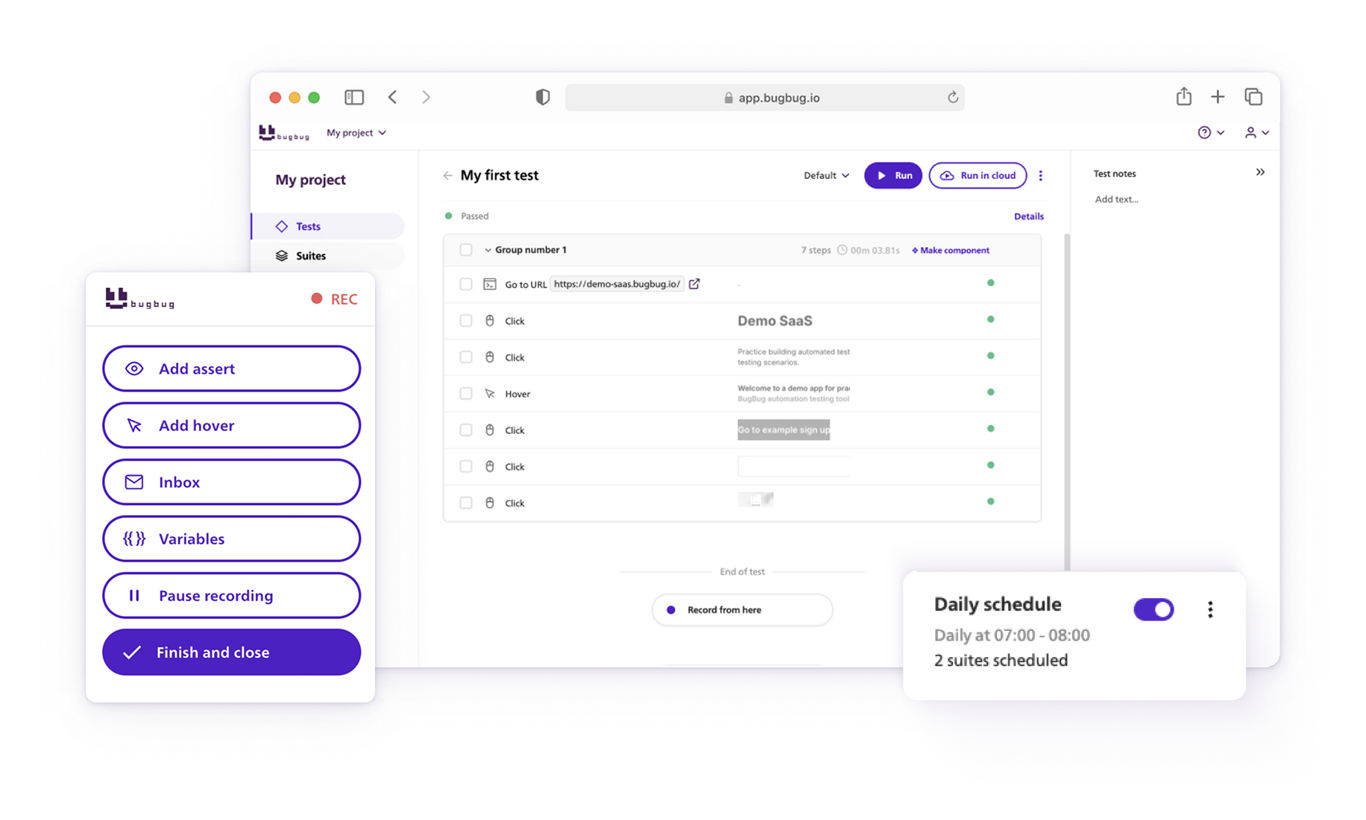
Your next release. Properly tested.
Join 1,200+ QA teams that automated their
regression coverage with BugBug.

Dominik Szahidewicz is a Software Quality Evangelist specialising in quality assurance, test automation, and modern software testing practices. He creates practical, research-driven content that helps QA professionals, developers, and product teams improve test coverage, automate repetitive testing, and release more reliable web applications.
Drawing on his experience in technical writing, data analysis, and application consulting, Dominik translates complex testing concepts into clear, actionable guidance. His areas of interest include end-to-end testing, low-code test automation, regression testing, and the use of AI in software quality assurance.

QA & Test Automation Expert
Bartek Krzyżanowski is a QA and test automation expert at BugBug with 15 years of experience in software testing and quality assurance. Throughout his career, he has worked with software teams on improving testing processes, designing effective test strategies, and building maintainable automated test coverage.
His expertise spans manual and automated testing, end-to-end and regression testing, test automation strategy, and the practical challenges teams face when maintaining reliable test suites as products evolve. He focuses particularly on approaches that help QA and engineering teams increase coverage while keeping test automation understandable, maintainable, and useful in everyday development workflows.
At BugBug, Bartek contributes his testing expertise to educational content for QA professionals, developers, and product teams. As an author on the BugBug blog, he writes about software testing methodologies, test automation tools, industry practices, and practical techniques teams can use to improve software quality.
His writing combines extensive industry experience with a pragmatic perspective on modern test automation, helping teams understand not only which tools and techniques are available, but how to apply them effectively in real-world software development.
Get more testing tips and product related content. Zero spam.
To code or not to code? An automation testing expert analyzes the pros and cons of different approaches to software test automation.
Discover the best practices for handling Stale Element Reference Exception in Selenium. Learn how to avoid it in your test automation code.
Playwright vs Selenium. Which wins for modern apps, when Selenium still beats it, and what to do if you can't code.
Compare the top Selenium alternatives for 2026 — from Playwright and Cypress to BugBug. See features, pricing, and which fits your team.
Explore the limitations of the most popular framework. Learn about alternatives and ways to overcome Selenium disadvantages.
Explore Selenium Webdriver locators, and commands with our Java Selenium Cheat Sheet.
Discover the top guide to selectors and locators in Selenium WebDriver. Learn how to locate web elements in the DOM using various locators.
What is Selenium IDE? - an essential tool in the Selenium Test Suite, used for creating test cases in browsers. Find tips and tutorials here!