🎁 Mystery prize unlocked

Congrats, you made it! Now enjoy your secret bug gallery.

You completed every step of the onboarding. As a small thank you, here’s a curated selection of 10 unusual and fascinating insects.

  • Ten unique species with scientific names and habitat information.
  • Includes both widely known and lesser-known, unusual insects.

01 Bocydium globulare

Brazilian Treehopper

Why it’s interesting: This small sap-feeding insect is famous for its unusual globular structures on the pronotum, which drastically change its outline and likely make it harder for predators to recognize.
Where it lives: It inhabits rainforests in northern parts of South America, spending most of its time on shrubs and trees in the canopy. Despite its striking appearance, it is rarely noticed without optical magnification.

The exact function of these hollow spheres is still discussed in entomology.
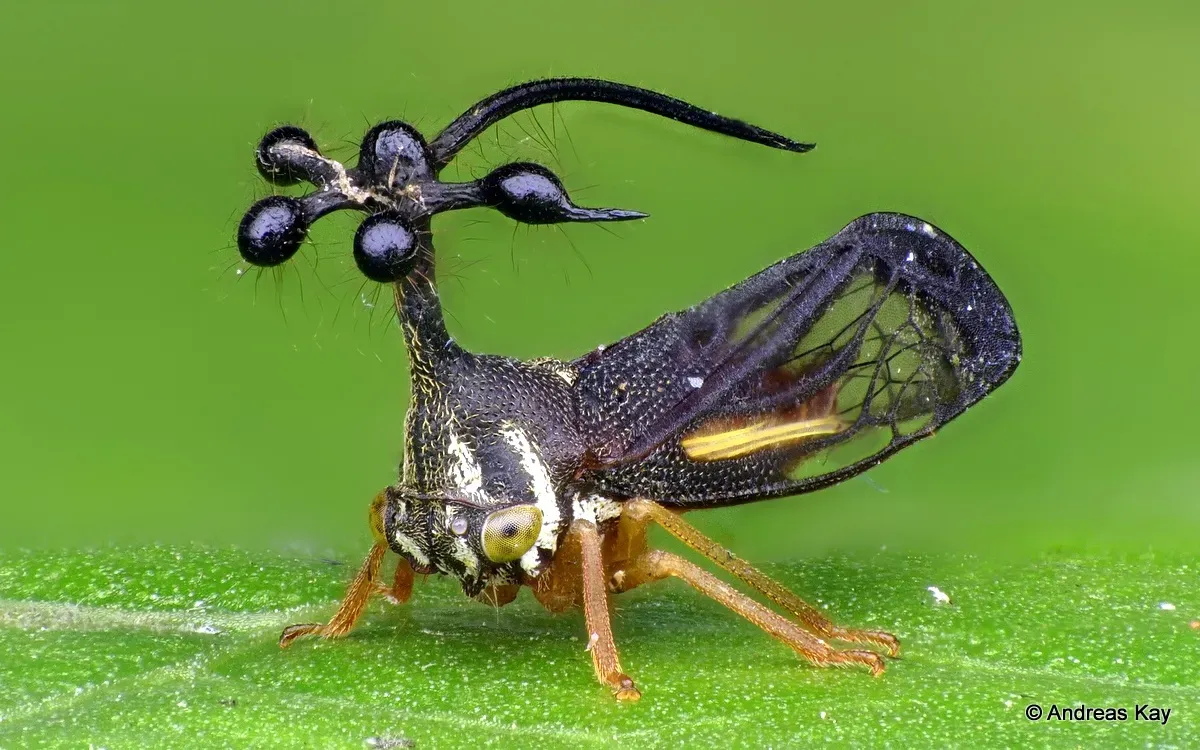
Brazilian treehopper
Brazilian treehopper with characteristic globular extensions on the pronotum.

02 Umbonia crassicornis

Thorn Bug

Why it’s interesting: The extended pronotum forms a sharp “thorn” that closely mimics the spines of the twigs it rests on. Thorn bugs also communicate using vibrations transmitted through plant stems, allowing individuals to coordinate and respond to disturbances.
Where it lives: Thorn bugs occur in subtropical and tropical regions from northern South America and Central America up into parts of the southern United States. They are often found in groups on ornamental, fruit and leguminous trees where they feed on plant sap.

Females may remain near clusters of nymphs, and the whole group can resemble a short row of thorns along a branch.
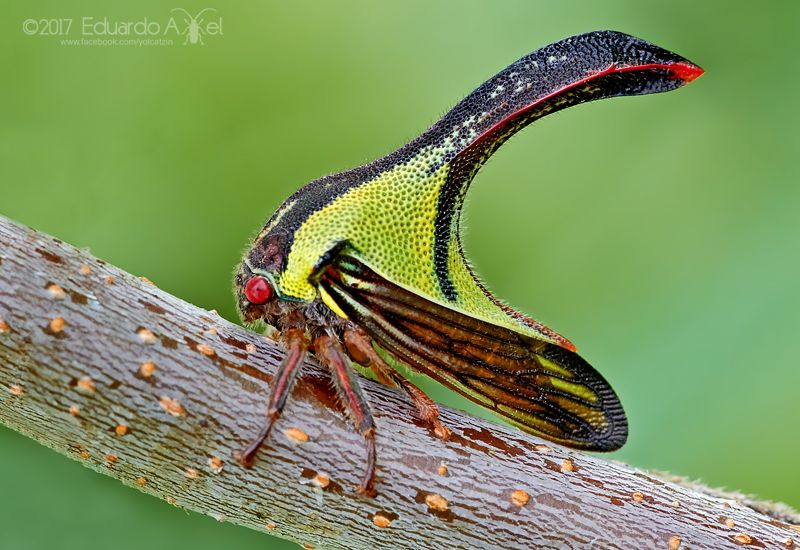
Thorn bug
Thorn bug perched on a branch, blending in with real plant thorns.

03 Trachelophorus giraffa

Giraffe Weevil

Why it’s interesting: Males have dramatically elongated necks, often several times longer than those of females, which they use to compete with rivals and to fold leaves into tubular “cradles” for eggs.
Where it lives: The giraffe weevil is endemic to Madagascar and is closely associated with certain host trees, such as Dichaetanthera species. It lives in humid forest habitats where suitable foliage is available for leaf-roll construction.

The species is a striking example of extreme sexual dimorphism in beetles.
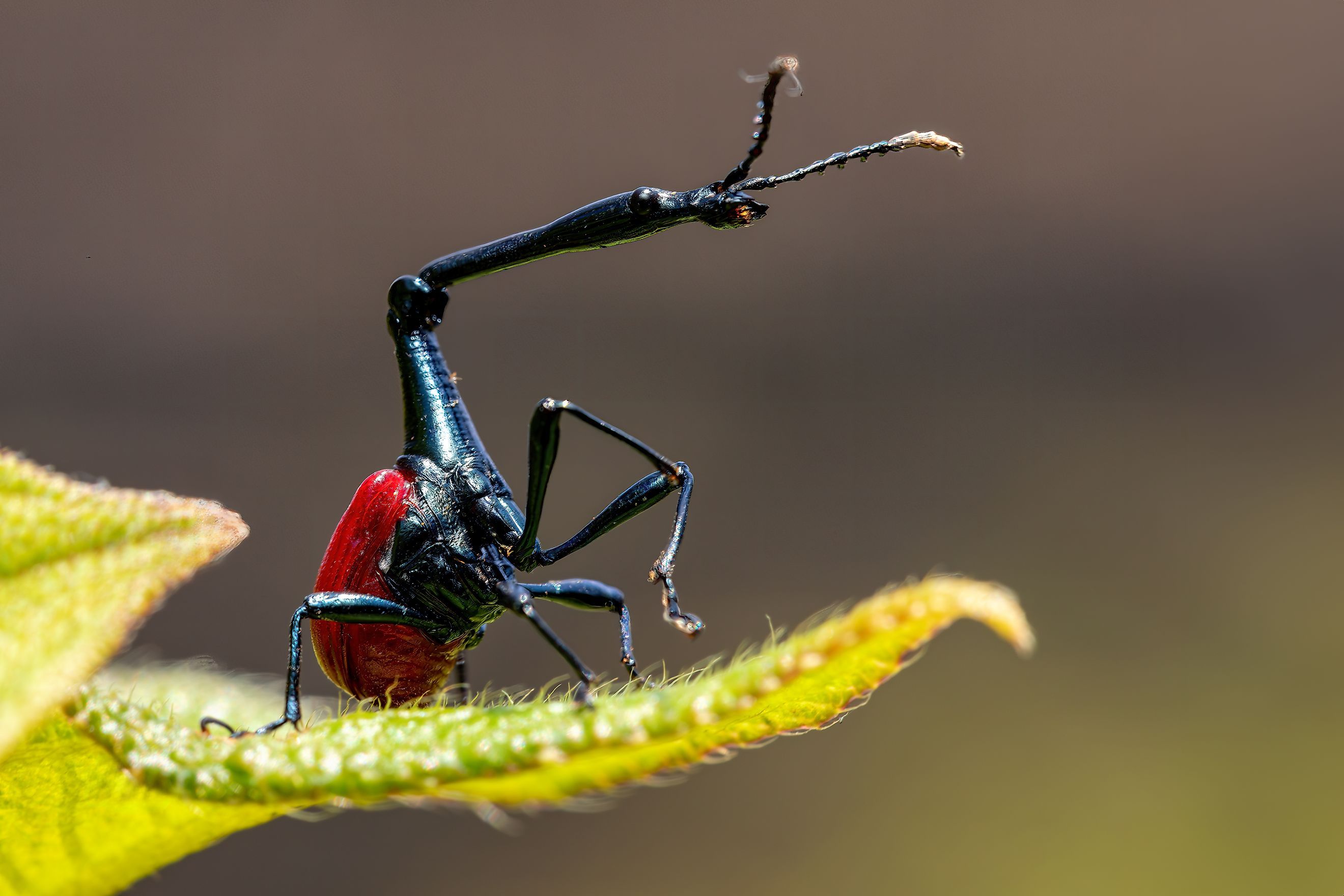
Giraffe weevil
Male giraffe weevil showing the elongated neck used in leaf-folding and competition.

04 Platerodrilus spp.

Trilobite Beetle

Why it’s interesting: Females remain larva-like throughout life, with a broad, flattened and heavily segmented body that resembles ancient trilobites, while males become small, winged beetles.
Where it lives: Trilobite beetles occur in humid lowland and montane forests of Southeast Asia, including Malaysia and Indonesia. They are usually found in leaf litter or on rotting wood in shaded, moist microhabitats.

Their cryptic lifestyle and limited distribution make them rarely observed in the wild.
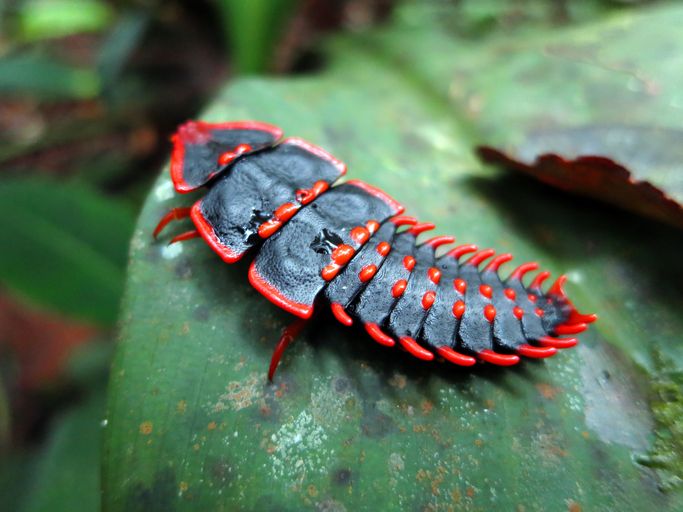
Trilobite beetle
Female trilobite beetle with strongly segmented, shield-like body.

05 Maratus volans

Peacock Spider

Why it’s interesting: Male peacock spiders raise a colorful abdominal fan and perform a coordinated courtship dance involving leg waves, vibrations and rapid movements.
Where it lives: Maratus volans is native to Australia and is typically found in dry scrub, open woodland and sandy habitats, especially along the east and southeast coast. Individuals are active during daylight and often encountered on low vegetation and leaf litter.

Their vivid color patterns often result from microscopic structures that manipulate light rather than from pigments alone.
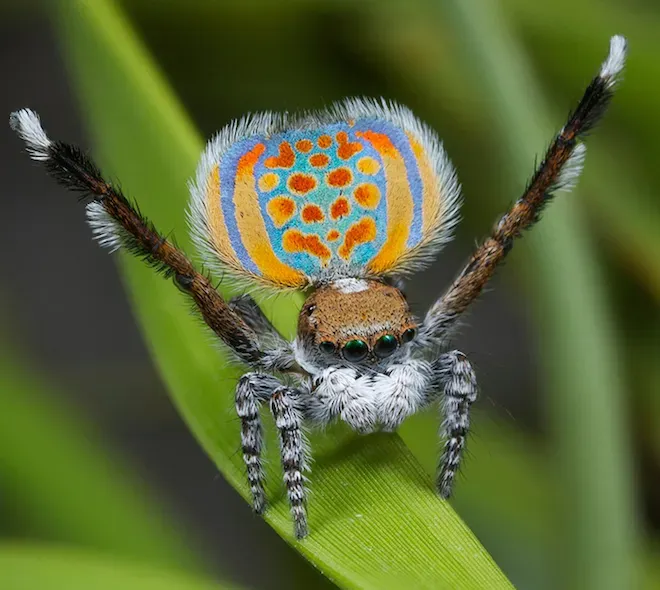
Peacock spider
Male peacock spider with raised fan during a courtship sequence.

06 Desmoxytes purpurosea

Shocking Pink Dragon Millipede

Why it’s interesting: This millipede is bright pink with prominent lateral spines, a classic aposematic (warning) color pattern advertising its chemical defenses. When disturbed, it can secrete hydrogen cyanide, making it unpalatable to most predators.
Where it lives: Desmoxytes purpurosea is known from limestone and karst forests in northern Thailand, where it inhabits leaf litter, rocks and fallen logs. It is typically encountered during or after rain when humidity is high.

The species was only described scientifically in the early 21st century, highlighting how many invertebrates remain poorly known.
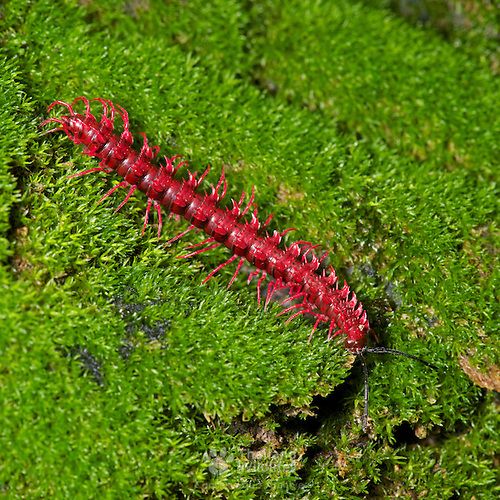
Shocking pink dragon millipede
The vividly colored shocking pink dragon millipede with defensive spines.

07 Greta oto

Glasswing Butterfly

Why it’s interesting: The transparent parts of its wings contain microscopic structures that greatly reduce light reflection, making the wings appear nearly invisible when viewed from many angles.
Where it lives: Glasswing butterflies occur from Mexico through Central America and into northern South America, especially in humid forests and forest edges. Adults often patrol along shaded trails and clearings where they visit flowers and host plants.

Their delicate appearance contrasts with their ability to undertake relatively long-distance movements across landscapes.

Glasswing butterfly
The transparent wing helps the butterfly avoid detection by blending visually into the background.

08 Hymenopus coronatus

Orchid Mantis

Why it’s interesting: The orchid mantis has body lobes and coloration that closely mimic flower petals, enabling a form of aggressive mimicry in which insects approach it as if it were a real blossom. Its forelegs then capture prey with great speed and precision.
Where it lives: This species is native to tropical forests of Southeast Asia, including parts of Malaysia, Indonesia and Thailand. In the wild it tends to occupy shrubs and herbaceous plants with pale or pink flowers that complement its own coloration.

Orchid mantises are also kept in captivity by invertebrate enthusiasts, which has helped make them well-known outside their natural range.
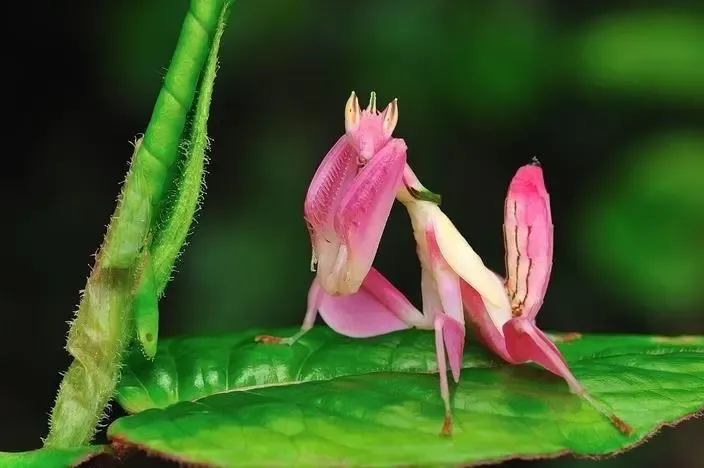
Orchid mantis
Orchid mantis displaying petal-like body lobes and coloration.

09 Acraga coa

Jewel Caterpillar

Why it’s interesting: The larva of Acraga coa has a translucent, jelly-like body with soft, glassy knobs that give it a gem-like appearance. Some of these structures may detach or burst when attacked, making it difficult for predators to get a firm grip.
Where it lives: Jewel caterpillars are found in tropical forests from southern Mexico through Central America, usually on the leaves of trees and shrubs. They inhabit both lower vegetation and higher foliage depending on host plant availability.

The adult moth is relatively plain, so most photographs focus on this distinctive larval stage.
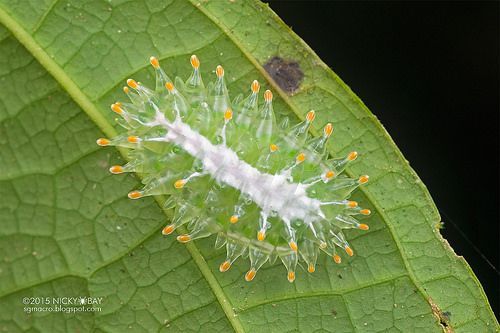
Jewel caterpillar
Jewel caterpillar with its translucent, jelly-like protective knobs.

10 Ampulex compressa

Emerald Cockroach Wasp

Why it’s interesting: This parasitoid wasp uses a highly precise venom injection into specific nerve centres of a cockroach, reducing its escape reflex without killing it. The wasp then guides the host to a burrow, where an egg is laid and the developing larva consumes the cockroach.
Where it lives: They occur in tropical regions of Africa, South and Southeast Asia and on some Pacific islands, and have been introduced or spread to additional warm areas. They are often found in habitats where cockroaches are common, including gardens and human settlements.

The species is frequently cited in discussions of insect neurobiology and host–parasite interactions.
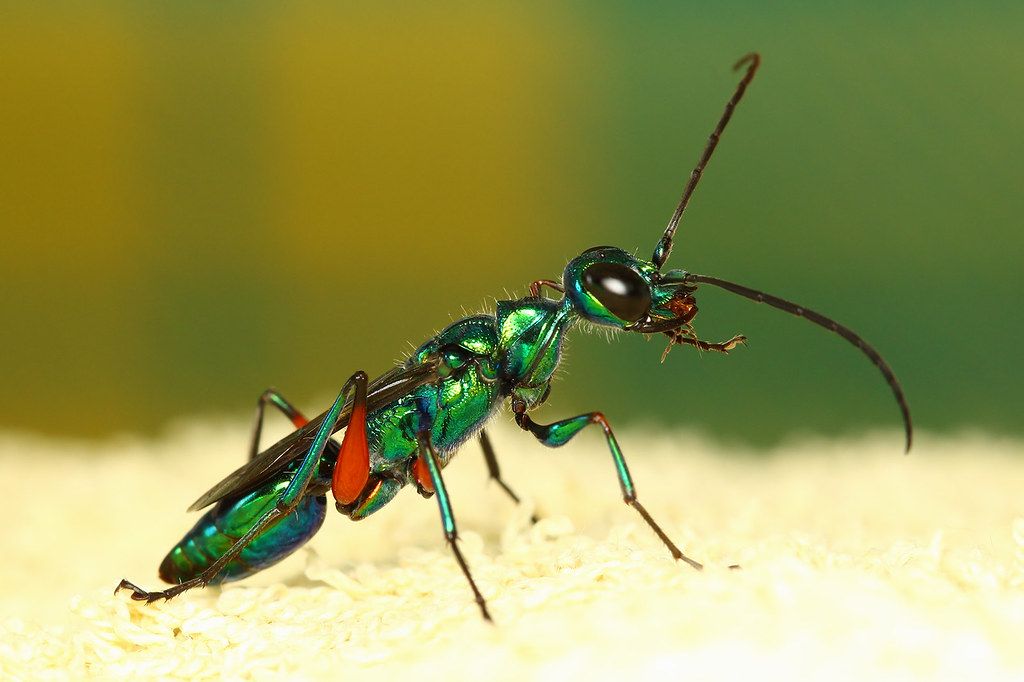
Emerald cockroach wasp
Emerald cockroach wasp with its characteristic metallic green sheen.